The Cover as Capital: What UK Publishers Spend to Be Seen
At a UK cover meeting, the debate may begin with a typeface and end with a spreadsheet. That is not a descent into philistinism. It is the moment the jacket stops being a design object and becomes a commercial instrument. By the time a title reaches acquisition, the cover has to do several jobs at once: signal category, carry author brand, survive a retailer thumbnail, satisfy booksellers and give marketing an image that can be cut, cropped and captioned across channels. The budget assigned to that work is one of the clearest indicators of how much confidence the publisher has in the book.
The first cover is the thumbnail
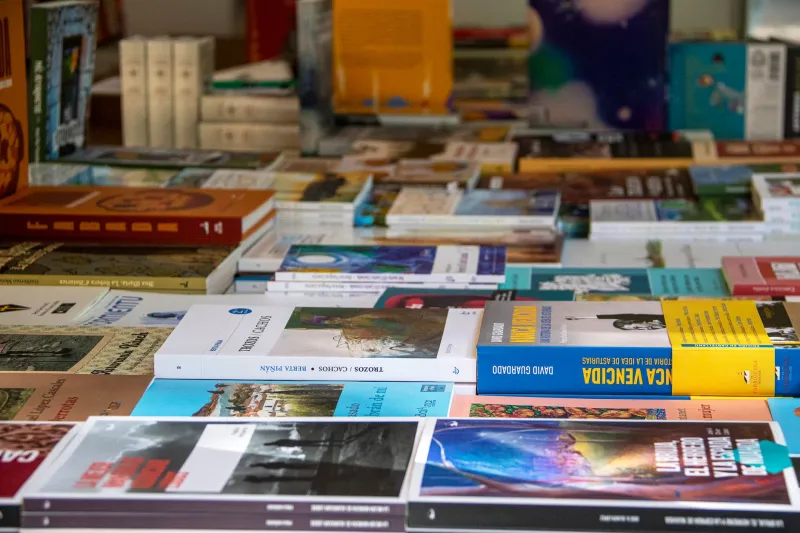
A jacket is now designed for a grid before it is designed for a table. Amazon UK, Waterstones, supermarkets and social feeds all present covers at small sizes, often beside competing titles with louder colours and simpler typography. The thumbnail is not a reduction of the jacket; it is the jacket most consumers will see first. Cover meetings therefore routinely include mocked-up screenshots at retailer scale, sometimes alongside a row of rival covers, to test whether the title reads clearly when it is no larger than a postage stamp.
This has changed the brief. Designers are asked for strong silhouettes, legible author names, restrained detail and a clear genre signal. Publishers also commission separate thumbnail files, adjusted for contrast and sharpening, because an image that works in print can disappear on a screen. The cost is rarely isolated in the budget. It sits inside design fees, retouching and production, but it is now a routine part of bringing a title to market.
What the design fee actually covers
Trade publishers typically separate the design fee from image rights, illustration, photography, retouching and testing. For a standard fiction or non-fiction title, a freelance designer might be paid £2,500 to £6,000 for initial concepts and final artwork. A lead title can attract higher fees, particularly when the publisher wants several routes and a full brand system. Illustrated covers cost more: a commissioned illustrator may receive £3,000 to £10,000, while original photography can add £5,000 or more once studio time, casting, props and usage rights are included.
In 2026, the spread has widened. Type-led covers remain cheaper to produce, but they carry their own risk: they must work harder in a crowded market and often need more testing. Publishers are also paying for accessibility checks, colour-proofing and adaptations for export editions. The design fee is therefore not the whole cover budget. It is the visible part of a cost stack that includes rights clearance, asset production and the time of in-house staff who brief, review and sign off.
Testing before printing
Consumer testing used to be reserved for lead titles. Now thumbnail testing is routine for many commercial lists. A publisher may spend £1,000 to £5,000 on online surveys, focus groups or rapid A/B tests, comparing two or three covers with target readers. The results are rarely decisive. They are useful for identifying obvious failures: unreadable type, misleading genre cues, or an image that reads as literary when the book is a thriller.
Bookseller feedback remains part of the process, but it is no longer the only external check. Sales teams want a cover that can be pitched in a season presentation; marketing wants an image that can be animated; rights teams want a look that travels. Testing does not eliminate risk. It gives the publisher evidence to defend a decision, and it adds a line to the budget that must be justified against the expected return.
The retailer asset pack
The cover is not one file. Retailers require flat JPEGs, transparent PNGs, three-dimensional packshots, series lockups and sometimes lifestyle imagery. Each asset has to be checked against metadata and retailer specifications. Asset production may cost £500 to £2,000, depending on complexity, and it is often the part of the process that causes delays. A jacket approved in June can still fail a retailer's technical check in September if the file is not prepared correctly.
This is why cover meetings are increasingly attended by production and operations staff as well as design and marketing. The commercial question is not simply whether the cover is good. It is whether it can be supplied, displayed and updated without friction. A beautiful jacket that cannot be rendered cleanly at thumbnail size is an operational liability.
Reading the budget line
The cover budget tells you how much faith the publisher has in the book. A modest spend suggests a title expected to earn out on core sales, with little room for experimentation. A higher spend signals a lead title, a strategic author or a category the publisher wants to own. Very high spend can also signal anxiety: when a cover goes through multiple rounds, external testing and several outside designers, the budget is buying reassurance as much as artwork.
The smarter publishers match cover spend to the marketing plan. A jacket cannot rescue weak positioning, and an expensive cover on a title with no publicity or bookseller support is a false economy. The budget line is most useful when it is read alongside the print run, the promotional spend and the sales target. Together, they show whether the publisher is designing for the market it has, or the market it hopes to find.
When the budget is small
Not every book can have a five-figure cover. Smart restraint often produces better results than a thin spread of effects. Type-led designs, strong series branding and careful photography can work well at lower cost, provided the publisher resists the temptation to over-complicate the brief. Backlist reissues are a useful test case: a new cover for an established title may need less testing but more consistency with the author's existing look.
The cover meeting is a risk committee in disguise. It decides what the book will look like when it is competing for attention, and it prices that decision. In 2026, the thumbnail is the jacket, and the budget line is the publisher's statement of belief.